Friends, I found this beautiful tutorial and I’m sharing the free pattern of the Tunisian baby blanket with you today. There’s something deeply satisfying about a blanket that works up with such intricate-looking texture but uses only the most fundamental Tunisian crochet movements. When I first watched Ayşenin Örgüleri demonstrate this technique, I knew immediately it belonged here on the blog. The full visual walkthrough is in the video below, and I encourage you to watch it closely — the rhythm of the work is easier to absorb when you see it in motion.
The Tunisian Baby Blanket
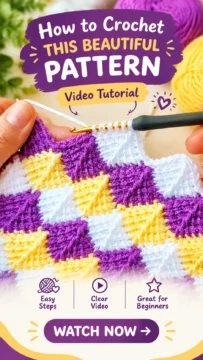
The finished blanket has a gorgeous, almost quilted appearance. The stitch pattern creates a series of raised, leaf-like motifs that repeat across the fabric in a gentle wave, giving the surface a wonderful three-dimensional quality that begs to be touched. The texture is dense enough to provide warmth without feeling heavy, and the drape is soft and substantial — exactly what you want for a baby blanket that will be used for tummy time, stroller rides, and cuddle sessions alike.
This is the kind of project that feels special from the moment you cast on. It’s meant for a baby shower gift, a christening present, or simply a handmade heirloom for your own little one. Because the pattern relies on a repeating motif rather than a complex chart, it’s approachable for confident beginners ready to stretch their skills into Tunisian crochet territory.
The color possibilities here are endless. The video demonstrates the blanket in a single, soft neutral tone, but I can easily picture it in sage, cream, and dusty rose for a vintage-inspired nursery, or a classic navy and white for something crisp and timeless. A soft gradient from pale gray to deeper charcoal would give the textured motifs a beautifully modern feel. You could even work each panel in a different shade for a subtle color-blocked effect.
Materials and Tools
For this project, you’ll need a Tunisian crochet hook — the instructor recommends a 3 mm hook for a tighter fabric, or a 4 mm hook if you’re making a full baby blanket and want a slightly softer, more drapey result. A standard crochet hook in the same size can also work if you don’t have a Tunisian hook on hand, though the longer shaft of a proper Tunisian hook makes holding all those loops much more comfortable. For yarn, I’d reach for a soft DK or worsted weight in a smooth, pliable fiber — something like a cotton-acrylic blend or a gentle merino would give you that lovely stitch definition while staying soft against a baby’s skin. You’ll also want a pair of scissors and a tapestry needle for weaving in ends. Follow the video for exact yardage and finished measurements.
Stitch by Stitch
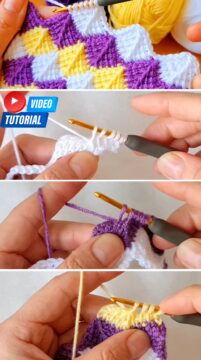
The tutorial relies on a handful of foundational Tunisian techniques that create the blanket’s distinctive texture:
-
Tunisian Simple Stitch (Tss) — the backbone of the fabric, worked by inserting the hook under the front vertical bar of each stitch and pulling up a loop.
-
Tunisian Return Pass — the working row where you yarn over and pull through loops to close the stitches, creating the fabric’s structure.
-
Loop clusters and decreases — the instructor demonstrates grouping loops together and working them off as a unit to create the leaf-like shaping.
-
Chain multiples — the pattern is worked in panels of 11 chains each, which forms the repeat for the textured motif.
There’s a meditative quality to Tunisian crochet that’s unlike any other technique — the rhythm of picking up loops and working them back creates a calm, focused flow that makes the hours slip by pleasantly.
Construction
This blanket is worked flat in repeating panels, with each panel beginning from a foundation chain and building upward in the textured motif. The instructor demonstrates working several panels in sequence, then joining or seaming them together to create the full blanket width. The shaping within each panel comes from strategically grouping loops and working decreases, which forms the raised leaf-like design. Because the pattern is based on an 11-chain repeat, you can easily customize the size — simply add or subtract panels to create anything from a small stroller blanket to a larger crib-size piece. The video shows a four-panel version, but you can adjust to your preferred dimensions. Follow the full video tutorial for exact counts and the complete pattern.
Beginner Tips
Count your loops carefully. Tunisian crochet requires you to keep track of every loop on your hook, and it’s easy to lose your place. Place a stitch marker or a small clip at the beginning of each repeat to help you stay oriented.
Keep your tension consistent. The fabric’s texture depends on even loops and smooth return passes. If you notice your stitches tightening up, take a moment to relax your grip and let the yarn flow more freely.
Don’t be afraid of the decrease clusters. The grouped loops and worked-together stitches might look intimidating at first, but they’re simply a matter of gathering loops and working them off as one. Practice on a small swatch before starting the full blanket, and you’ll quickly find your rhythm.
Using Your Tunisian Baby Blanket
This blanket is as practical as it is beautiful. Drape it over the back of a nursery chair for a touch of handmade warmth, tuck it into a stroller for chilly morning walks, or lay it flat for tummy time — the dense, textured fabric provides a comfortable, cushioned surface. It also makes a thoughtful gift that carries the weight of your time and care in every stitch.
Keeping Your Tunisian Blanket Looking Its Best
Gentle care will keep this blanket soft and beautiful for years to come. Hand wash in cool water with a mild detergent, then gently squeeze out excess water without wringing or twisting. Lay it flat to dry, shaping it gently to maintain its dimensions, and avoid hanging it while wet, which can stretch the fabric. Store it folded in a dry place, and if you need to refresh it between uses, a quick airing outdoors on a breezy day works wonders.
Closing: A Personal Invitation
There’s something quietly powerful about making a blanket with your own hands — the patience it teaches, the comfort it carries, the way it becomes part of someone’s everyday life. I hope this tutorial inspires you to pick up your Tunisian hook and give it a try.
If you enjoyed this project, take a look at my other free crochet patterns: Crochet for Beginners and Basic Crochet Stitches Guide.
And if you’re just starting out, visit the Guides section, where I’ve collected helpful articles about crochet basics and techniques: Crochet Tips, Tricks, and Techniques.
Save this Tunisian Baby Blanket to your Pinterest crochet board so you can come back to it whenever you are ready to start.
Follow us on Pinterest and subscribe to the Newsletter so you don’t miss a thing!
Tutorial and photos of this Tunisian baby blanket by: Ayşenin Örgüleri.
-
Hello Kitty Baby Booties Crochet Pattern | 4 Sizes 0-12 Months | Bow & Ears to Pinterest (opens in a new window)
- Sale!
- Crochet, Baby Booties, Hello Kitty, Themed Patterns
Hello Kitty Baby Booties Crochet Pattern | 4 Sizes 0-12 Months | Bow & Ears
- Original price was: $6.99.$5.99Current price is: $5.99.
- Add to cart
-
Hello Kitty Christmas Hat Crochet Pattern | Santa Hat + Earflaps | 7 Sizes to Pinterest (opens in a new window)
- Sale!
- Crochet, Hats, Hello Kitty, Seasonal & Holiday
Hello Kitty Christmas Hat Crochet Pattern | Santa Hat + Earflaps | 7 Sizes
- Original price was: $6.99.$5.99Current price is: $5.99.
- Add to cart
-
Hello Kitty Hat Crochet Pattern | 7 Sizes Newborn to Adult | Earflap & Bow to Pinterest (opens in a new window)
- Sale!
- Crochet, Hats, Hello Kitty, Themed Patterns
Hello Kitty Hat Crochet Pattern | 7 Sizes Newborn to Adult | Earflap & Bow
- Original price was: $6.99.$5.99Current price is: $5.99.
- Add to cart
-
Strawberry Hat Crochet Pattern | 7 Sizes Newborn to Adult | Leaf & Flower Topper to Pinterest (opens in a new window)
- Sale!
- Crochet, Hats, Strawberry
Strawberry Hat Crochet Pattern | 7 Sizes Newborn to Adult | Leaf & Flower Topper
- Original price was: $6.99.$5.99Current price is: $5.99.
- Add to cart